

 Dodaj wydarzenie
 Kalendarz
 Moje konto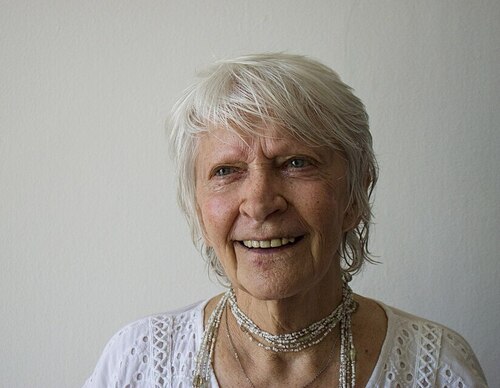


Her voice smelled of Paris, her childhood rung like Bucharest violins, and her youth played out amongst Polish cabaret troupes and radio microphones. Joanna Rawik is an artist who never let herself be pigeonholed. Who was she really, and how did she manage to combine the elegance of French song with the Polish everyday life?
Joanna Rawik – history
Joanna Rawik was born on the 31st of January 1934 in Czerniowce, then part of Romania. Her childhood could be described as multicultural – though her mother was Romanian, Joanna grew up in a community where French, German, and Romanian were all spoken alternately. She started to gain fluency in Polish in her teenage years, after repatriation to the country.
Joanna’s first contact with music was at seven years old, when she begun violin lessons at the Bucharest conservatory. She was taught by Ion Pirlej, student of one George Enescu. Musicality and exposure to French culture enormously influenced her further artistic pursuits.
Joanna Rawik – Romantyczność
After the Second World War, in 1947, the Rawik family moved to Poland and set up home in Wrocław. Thirteen-year-old Joanna had faced some trouble acclimatizing. Because of her place of origin and a sort of “foreignness”, she had even been expelled from high school, and later, from the Union of Polish Youth. She was finally welcomed and accepted at a youth theatre within a local Youth Community Centre, where she was taken under mentorship of Szymon Szurmieja. Later on, Joanna made her way into Irena & Tadeusz Byrski’s Drama School (Studium Teatralne) which opened the path leading onto the stage.
Joanna’s first significant steps in the world of art were taken on the air and in Polish cabaret. In 1951 she won a voice-over contest and started work at the Polish Radio in Wrocław, showcasing the uniqueness of her voice. What cemented her vocal talent as undeniable was her debut in the Kaczka cabaret troupe where she would perform French songs. Rawik took every effort to gain experience in on-stage performance, and as her vocal range grew, so did her roster of abilities within voicework.
Her career was actively branching – she would perform on road shows, sing with jazz bands (e.g. Siedem Czarcich Łap with whom she was awarded a prize at a contest in Lublin), and eventually would move to Krakow. There, Joanna joined the Pod Jaszczurami club and Kundel cabaret troupe, at the same time attaching to herself a stage name – Rawik.
Rawik – music
The year 1965 marked a breakthrough in her career. At the age of 31, she began to perform outside of Poland. Paris, Lyon, then the famed Parisian „Grand Music-Hall de Varsovie” – these spots brought notoriety to Rawik’s name and made her a frequent comparison to acclaimed stars. In Poland, however, her fame blossomed through festivals. In 1966, she won an award in Opole for her song “Nie chodź tą ulicą”, and a year later, “Po co nam to było” became a huge hit that remained popular for decades. In subsequent years, she received awards for “Romantyczność” and “Chlebem i solą”. She toured not only in Poland but also in Czechoslovakia, the USSR, West Germany, Yugoslavia, Australia, and the USA. Joanna Rawik was recognizable, elegant, and her distinctive, low tones and French repertoire set her apart from most singers of the time.
Joanna Rawik – Po co nam to było
From the 1970s, she decided to come back to radio, working just as she had at the beginning of her career. She hosted original programs, particularly about one of her greatest inspirations – Édith Piaf. Joanna’s fascination with the French singer sprouted books “Hymn życia I miłości” and the monodrama “Édith Piaf – Ptak Smutnego Stulecia”, which she put out at the Polish Radio Theatre. She also devoted herself to writing, publishing a biography of Wanda Wiłkomirska and her own memoir, “Kocham świat”.
Joanna Rawik now
Though Rawik gradually shifted her focus away from stage singing, she went on performing many times in the 21st century for her loyal fanbase. Joanna Rawik officially retired from on-stage performance (as she herself stated in January 2025), her last major stage appearance being a recital in September 2021. She would take part in more intimate shows, like literary talks, broadcasts, and remembrances. The artist still is actively involved in the world of culture – primarily through radio, literature, and participation in music festivals. Even at an advanced age, Joanna Rawik remains an active figure in the Polish music scene, sharing her knowledge, experience, and love of song, especially the French variety.
Joanna Rawik’s hit songs
- Nie chodź tą ulicą (1966)
- Po co nam to było (1966)
- Nie z każdej mąki będzie chleb (1966)
- Romantyczność (1969)
- Chlebem i solą (1970)
Author: Paweł Skarzyński
Image source: Wikipedia
Author of English translation: Martyna Ginda

Did you like our article? Check out other music news!
 Read also: Józef Skrzek – a multitalented musician. Do you know his songs?
Read also: Wanda i Banda – Hi-Fi beyond just the name. The band’s story
Read also: Fisz – his history. He’s in his element when he’s making music
Read also: Jimek – what connect Ranczo, Wisłocka and Sexify?
Read also: Antoni „Ziut” Gralak – the trumpeter who showed how to make jazz
Read also: Patricia Kazadi – someone who made the most of her chance to be successful