

 Dodaj wydarzenie
 Kalendarz
 Moje konto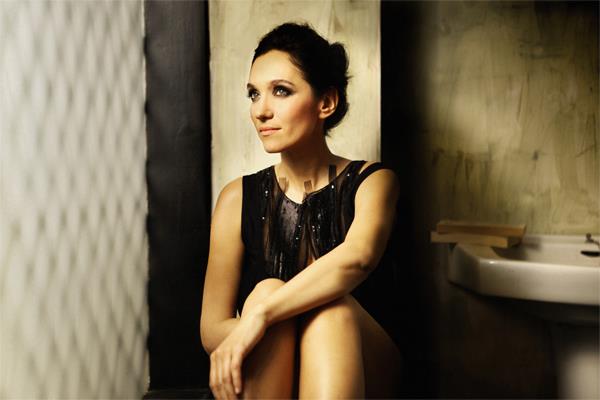


Jazz isn’t just a genre—it’s a way of experiencing the world. Its improvised lines embody tenderness, rebellion, heritage, and intimacy. For Dorota Miśkiewicz, jazz became less an artistic choice than a natural language—inherited, domesticated, and rewritten on her own terms.
Dorota Miśkiewicz – history
Dorota Miśkiewicz was born on September 12, 1973, in Kłodzko. She grew up in a family vibrant with music. She had a very strong musical background – her father, Henryk Miśkiewicz, was a renowned jazz saxophonist, and her mother was a trained pianist. It could be said that growing up in such a family significantly increased the chances of becoming a musician, as evidenced by the fact that Dorota Miśkiewicz’s brother became a renowned drummer.
Music in Dorota’s family home wasn’t limited to her parents’ professional activities, but also manifested itself in other areas of everyday life. The now mature artist recalls her youth fondly, remembering the significant role music played. When the family went on vacation, they listened to the numerous records her father bought; during the holiday season, they sat at the piano and played Christmas carols together; and in the letters they wrote to each other, they described the emotions accompanying musical events. There was, therefore, a great deal of music, which undoubtedly influenced Dorota’s interests.
Dorota Miśkiewicz particularly enjoyed playing the violin. She learned it not only at home—her education was also connected to music. She attended music school for many years. However, she remembers this period as very stressful—teachers imposed strict discipline, and final exams were designed to test her talent. Ultimately, she overcame these challenges and continued her musical education. After graduating from high school, she began studies at the Fryderyk Chopin Academy of Music in Warsaw (now the Fryderyk Chopin University of Music), graduating in 1997 with a degree in violin performance. Although she eventually focused more on singing, her instrumental education provided her with a solid technical and theoretical foundation.
Dorota Miśkiewicz – music
While still a student, Dorota Miśkiewicz first tried her hand at professional music making. In 1994, she began working with Włodzimierz Nahorny, a renowned Polish jazz musician. She was a vocalist in his sextet, which allowed her to develop her improvisational skills and technical precision on stage.
Dorota Miśkiewicz recorded four important albums with Włodzimierz Nahorny, performing as both vocalist and violinist. These albums covered a variety of topics – one album contained Christmas carols, another featured interpretations of the Myths triptych. However, all four were jazz-inspired. This thematic diversity of the albums taught Miśkiewicz flexibility in creating jazz.
After graduating from the Academy of Music, Miśkiewicz began to focus increasingly on singing, treating vocals as her primary means of expression. She also performed as a chorister and backing vocalist, including alongside renowned musician Grzegorz Turnau.
Dorota Miśkiewicz – Poza czasem
In 2002, she decided to release her debut solo album. To this end, she founded the band Dorota Miśkiewicz Goes To Heaven. Together with the band, she fulfilled her dream by releasing her first album, “Zatrzymaj się” (Stop). It featured eleven songs, most of which were composed entirely of lyrics and music by Dorota. “Zatrzymaj się” proved to be a considerable success – it was nominated for a Fryderyk Award in the “Jazz Album of the Year” category and received critical acclaim.
After such a positive reception, Miśkiewicz was forced to continue her artistic career. Just three years later, in 2005, she released her second album, “Pod Rzęsami.” This was the first album signed solely under her name since the artist abandoned the idea of a permanent band.
Three years later, in 2008, she released another album, “Caminho”. For this album, Miśkiewicz was nominated for Fryderyk Awards in two categories: “Female Vocalist of the Year” and “Pop Album of the Year.” “Caminho” is another success for her, thanks in part to one of the most popular songs of her career, “Um Pincelada.” This song, full of unique atmosphere, stole the hearts of fans, and its uniqueness was emphasized by a guest appearance by Cesária Évora, a legend of Cape Verdean music. The album was strongly inspired by the sounds of Lusophone countries, featuring elements of bossa nova, samba, and morna—styles originating in Brazil, Portugal, and the Cape Verdean Islands. “Um Pincelada” introduced this genre to Polish listeners in particular.
Dorota Miśkiewicz – Um Pincelada
In the following years, Miśkiewicz regularly released new albums, which were stylistically diverse – thanks in part to her experience working with Włodzimierz Nahorny. One gets the impression that the artist, despite her already extensive musical output, isn’t slowing down. She regularly delivers new music to her fans, consistently of high quality, and her voice continues to captivate with its beauty and unique character.
An album that definitely deserves a mention is “Nasza miłość.” Released in 2021, it was the first collaborative project between Dorota Miśkiewicz and her father, saxophonist Henryk Miśkiewicz, as a gift for his 70th birthday. The singer had previously collaborated with her brother, Michał. This demonstrates that despite her success, Dorota Miśkiewicz has not forgotten her most important values, combining her love of music with her love of family.
Dorota Miśkiewicz’s story is an incredibly inspiring journey, full of exploration, trials, experiments, and a deep commitment to family values. Although contemporary society increasingly speaks of the decline of authority, her attitude and work are proof that sensitivity, consistency, and adherence to one’s values still hold immense importance. She is certainly someone worth being inspired by.
Dorota Miśkiewicz – discography
- Zatrzymaj się (2002)
- Pod rzęsami (2005)
- Caminho (2008)
- ALE (2012)
- Lutosławski, Tuwim. Piosenki nie tylko dla dzieci (2013)
- Best of (2016)
- Piano.pl (2016)
- Nasza miłość (2021)
- Gore gwiazda Jezusowi (2021)
- Bons Amigos (2023)
Article: Paweł Skarzyński
Translate by: Paulina Lewandowska
Zdjęcia: Oficjalny facebook zespołu

Did you like our article? Check out other music news!
 Read also: Józef Skrzek – a multitalented musician. Do you know his songs?
Read also: Wanda i Banda – Hi-Fi beyond just the name. The band’s story
Read also: Fisz – his history. He’s in his element when he’s making music
Read also: Jimek – what connect Ranczo, Wisłocka and Sexify?
Read also: Antoni „Ziut” Gralak – the trumpeter who showed how to make jazz
Read also: Patricia Kazadi – someone who made the most of her chance to be successful